Resistencia sonora, historia escénica: una reseña de *Uprize!*, de Sifiso Khanyile
por Ndidi J. Iroh
18 de junio de 2026
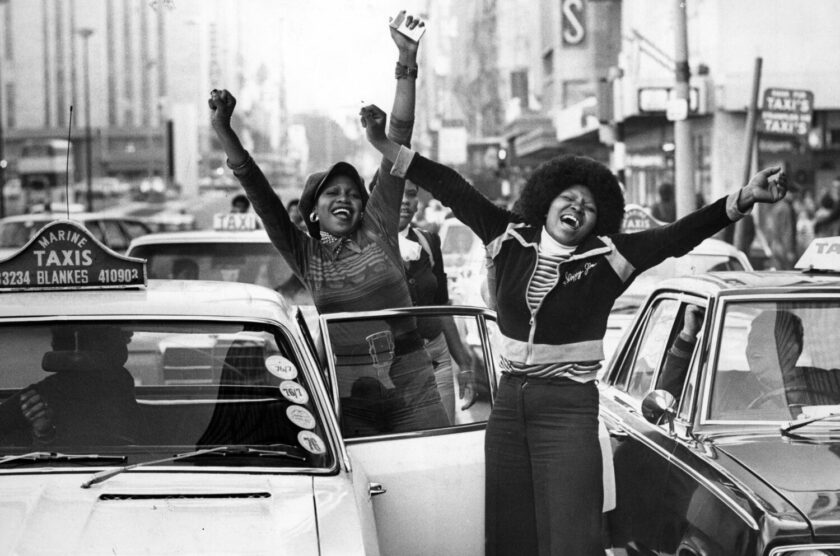
La mañana del 16 de junio de 1976, miles de estudiantes se manifestaron por las calles de Soweto, en Sudáfrica, en una protesta coordinada y pacífica contra la imposición del afrikáans como lengua principal de enseñanza en las escuelas para la población negra. Lo que comenzó como un acto colectivo de rechazo pronto se convirtió en uno de los momentos políticos más determinantes de la historia de Sudáfrica. Ante la violencia policial, la protesta se transformó en un escenario de enfrentamiento que se saldaría con cientos de muertos. Los acontecimientos de aquel día perdurarían como un símbolo definitorio en el imaginario político sudafricano, marcando un momento emblemático de resistencia juvenil contra el apartheid.
Sin embargo, más allá de las imágenes que han llegado a definir el levantamiento, se esconde una historia más amplia de educación política, producción cultural y organización colectiva. Es en este contexto donde se enmarca el documental de Sifiso Khanyile ¡Arriba! (2017) se enmarca en este contexto, revisando los acontecimientos del 16 de junio no solo como un punto de inflexión histórico, sino como un momento marcado por la música, la poesía, el teatro y las corrientes intelectuales del Movimiento de la Conciencia Negra.
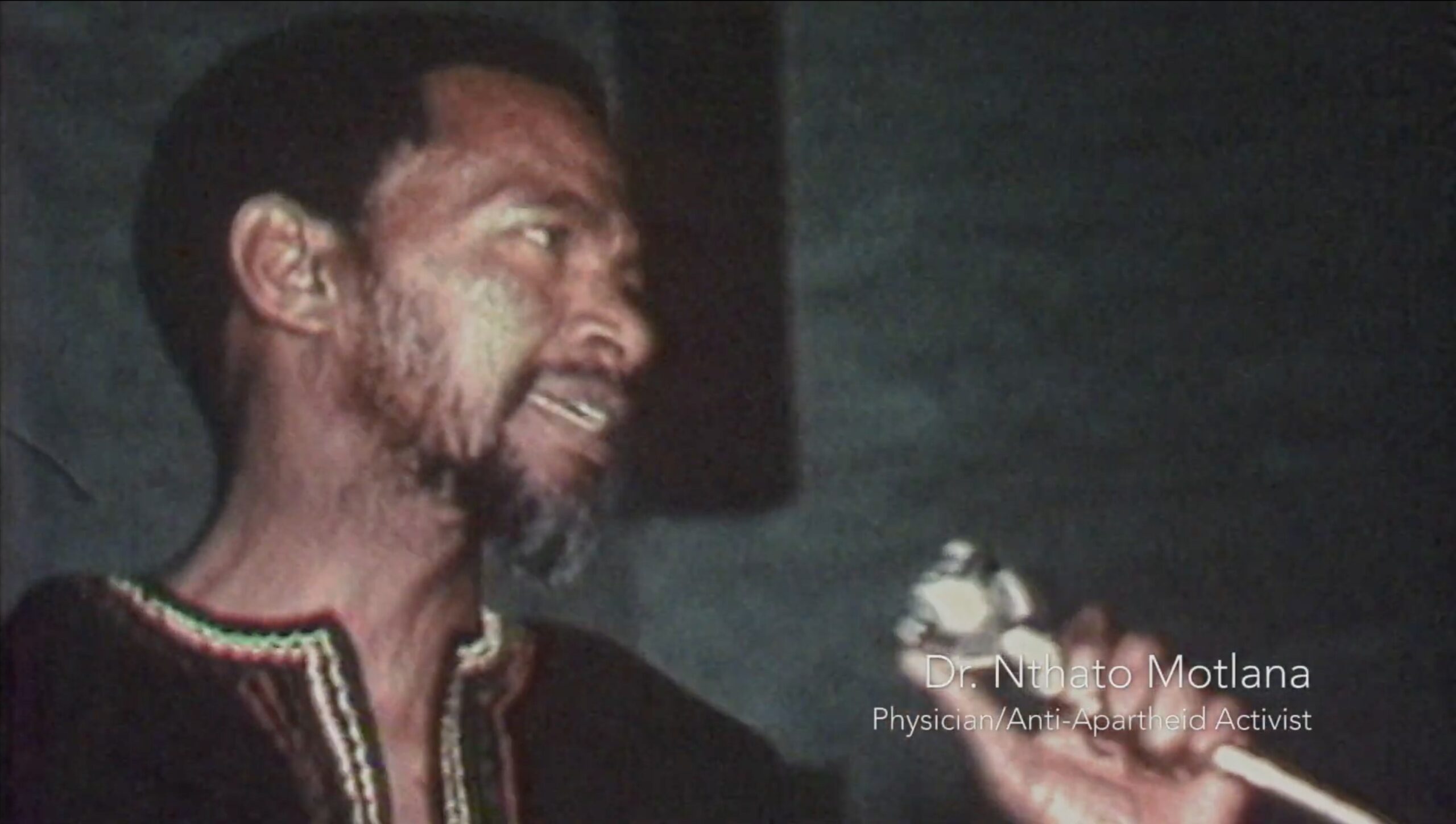
Fotograma de «UPRIZE!» (2017): el Dr. Nthato Motlana, hablando sobre la Conciencia Negra – Soweto, 1977
Estrenada en 2017, ¡Arriba! repasa los acontecimientos que rodearon el levantamiento de Soweto del 16 de junio a través de material de archivo, testimonios, música y las corrientes culturales que marcaron a toda una generación de jóvenes sudafricanos negros. Dirigido por Sifiso Khanyile, cineasta, productor e investigador de archivos afincado en Johannesburgo, el documental va más allá de un mero relato del levantamiento en sí, situándolo en un panorama más amplio de vida intelectual, resistencia y organización comunitaria. Basándose en material de archivo poco conocido y en relatos de primera mano, la película traza las corrientes intelectuales y artísticas que circularon en paralelo a la lucha, poniendo de relieve el papel del Movimiento de la Conciencia Negra y las artes de la resistencia que surgieron durante un período de censura, encarcelamiento y exilio. Al hablar de la película, Khanyile describe un deseo de larga data de contar historias africanas desde una perspectiva africana. “Siempre hay una sed de autenticidad”, reflexiona, “un deseo de contar nuestras historias a través de nuestra propia lente”. A través de este enfoque, ¡Arriba! se convierte no solo en un documento de un momento político decisivo, sino también en una exploración de historias, voces y prácticas culturales que siguen resonando casi cinco décadas después.
El levantamiento de Soweto tiene su origen en el sistema educativo bantú, uno de los instrumentos de control más omnipresentes del apartheid. Introducido en 1953, pretendía regular no solo el acceso a la educación, sino también las perspectivas de futuro de los estudiantes sudafricanos negros. La educación se convirtió en un mecanismo a través del cual se reproducía la jerarquía racial, determinando quién podía desplazarse, trabajar, aprender y participar en la sociedad. Estas condiciones se agudizaron aún más en 1974, cuando el gobierno del apartheid decretó que el afrikáans, junto con el inglés, se utilizara como lengua principal de enseñanza en las escuelas para negros. Más que una política lingüística, la decisión amplió el alcance del poder estatal hasta el propio aula. A medida que el idioma, la educación y la autoridad política se entrelazaban cada vez más, las escuelas se transformaron en espacios donde la frustración, el debate y la conciencia colectiva podían circular y adoptar formas de resistencia. A mediados de la década de 1970, una generación de estudiantes había comenzado a cuestionar no solo las condiciones en las que se les impartía la enseñanza, sino también el sistema más amplio que pretendía definir los límites y las restricciones de su futuro.
La conciencia política que marcó a esta generación no surgió de forma aislada. Un elemento fundamental de ese periodo fue el Movimiento de la Conciencia Negra, que pretendía cuestionar no solo las estructuras legales del apartheid, sino también sus dimensiones psicológicas. Liderado por figuras como Steve Biko y moldeado por organizaciones estudiantiles, entre ellas la Organización de Estudiantes Sudafricanos (SASO) y el Movimiento de Estudiantes Sudafricanos (SASM), el Movimiento de la Conciencia Negra animó a los jóvenes a rechazar la interiorización de la inferioridad racial y a recuperar su capacidad de acción política. Dentro de ¡Arriba!, este marco ideológico se erige como una fuerza vital que sustenta el levantamiento, revelando cómo la resistencia se fue forjando mucho antes de que los estudiantes salieran a las calles el 16 de junio. Como señala Khanyile, la prohibición de los movimientos de liberación y el encarcelamiento o el exilio de los líderes políticos crearon un vacío en el que una generación más joven se vio obligada a dar un paso al frente. En este contexto, las ideas políticas circulaban por las escuelas, las redes comunitarias, los espacios culturales y las organizaciones estudiantiles, dando forma a una visión colectiva de la autodeterminación que se volvería inseparable de los acontecimientos de 1976.
Fotograma de ’UPRIZE!» (2017): Organización de Estudiantes Sudafricanos (SASO)
“A finales de la década de 1960 y principios de la de 1970, la gente empezaba a reflexionar cada vez más de forma crítica sobre la autodeterminación y la liberación, y esos debates solían estar presentes en la producción cultural. La música que surgió de ese periodo es una música que me encanta de verdad. El arte que surgió de ese periodo es un arte que admiro enormemente. Y la política de aquella época siempre me ha llegado al alma. Por todas esas razones, hacer un documental sobre este momento me pareció una conclusión natural”.”
En lugar de basarse únicamente en imágenes de archivo para relatar los acontecimientos del 16 de junio, ¡Arriba! Se desarrolla a través de una superposición de voces, imágenes y testimonios. Antiguos activistas, estudiantes y organizadores reflexionan sobre sus experiencias, alternando entre la memoria personal y la historia política. A lo largo de la película, el material de archivo se entremezcla con estos recuerdos, creando momentos en los que las experiencias individuales se entrecruzan con narrativas históricas más amplias. Las historias que surgen son a menudo íntimas, basadas en la experiencia vivida, sin dejar de ser inseparables de las condiciones políticas más amplias que las moldearon. Al volver a examinar estos relatos, la película presta especial atención a las personas que los vivieron, poniendo en primer plano voces que a menudo han permanecido al margen de las narrativas históricas dominantes de Sudáfrica. El arte, la música y la performance aparecen a lo largo de la película como algunas de las formas mismas a través de las cuales se expresó, se mantuvo y se recordó la resistencia.
Al reflexionar sobre ese periodo, Khanyile destaca las formas en que la producción artística se volvió inseparable de la vida política:
“Como africanos, a menudo nos enfrentamos a la mirada occidental sobre nuestras narrativas. A veces, esa mirada puede ser limitada y, otras, sesgada. Puede haber ciertos supuestos implícitos en la forma en que se cuentan nuestras historias. Por eso, siempre existe un ansia de autenticidad, un deseo de contar nuestras historias desde nuestra propia perspectiva, en lugar de quedarnos en un segundo plano frente a la visión de otra persona. En el caso de esta historia en concreto, siempre me han interesado mucho las artes de la resistencia de la década de los setenta, especialmente las relacionadas con el Movimiento de la Conciencia Negra. Fue un período en el que los movimientos de liberación estaban prohibidos y muchos líderes políticos se encontraban encarcelados o se habían visto obligados al exilio. Como consecuencia, se produjo un vacío de liderazgo y, en muchos sentidos, un vacío de conciencia política. A la gente no se le permitía hablar abiertamente de política. Los sudafricanos negros no podían hablar libremente de sus líderes sin correr el riesgo de ser encarcelados o perseguidos. Lo que me pareció inspirador fue la forma en que jóvenes de ambos sexos dieron un paso al frente para llevar adelante la lucha durante ese periodo. Asumieron la responsabilidad de mantener la resistencia en circunstancias increíblemente peligrosas”.”
Esta relación entre el pensamiento político y la expresión artística se extiende al lenguaje formal de ¡Arriba! en sí misma. El sonido se convierte en una de las principales vías a través de las cuales la película se relaciona con el pasado, no solo acompañando el material de archivo, sino entablando un estrecho diálogo con él. En un principio, Khanyile había esperado incorporar grabaciones de la época, para que el público entrara en contacto directo con los sonidos que resonaban en la era de la Conciencia Negra. Ante las difíciles circunstancias económicas que supone la adquisición de los derechos de la música de archivo, la producción optó por un camino diferente. En colaboración con el sello discográfico con sede en Johannesburgo La hora de las setas: media hora, los cineastas encargaron una banda sonora original inspirada en las tradiciones del jazz, las prácticas de improvisación y las energías políticas de la década de los setenta. El resultado no fue un intento de recrear el pasado, sino una respuesta sonora al mismo, que permitió a los músicos contemporáneos entablar un diálogo con el propio archivo.
El proceso mediante el cual se desarrolló la banda sonora refleja la reflexión más amplia de la película sobre la memoria y el testimonio. En lugar de componer la música una vez finalizado el documental, se invitó a los músicos a sumergirse en el material mientras este aún estaba tomando forma. Cada día se les facilitaban grabaciones de entrevistas, que en ocasiones ascendían a varias horas de metraje de una sola vez. Al vivir y trabajar juntos durante todo el proceso, los músicos respondieron directamente a las historias con las que se encontraban tanto dentro como fuera de la pantalla. Lo que comenzó como un intento de evocar los sonidos de la década de 1970 se fue convirtiendo poco a poco en algo más amplio. A medida que los recuerdos de resistencia, pérdida, esperanza y despertar político se iban desvelando a través de las entrevistas, la música seguía su ritmo. Al reflexionar sobre la colaboración, Khanyile señala que “se convirtió más bien en una forma de crear una conversación entre las imágenes, la música y la narrativa”. Surgida de un intercambio continuo entre los músicos y el material, la banda sonora entabla un diálogo con el archivo, respondiendo a los ritmos, los silencios y la carga emocional que transmiten los propios testimonios.
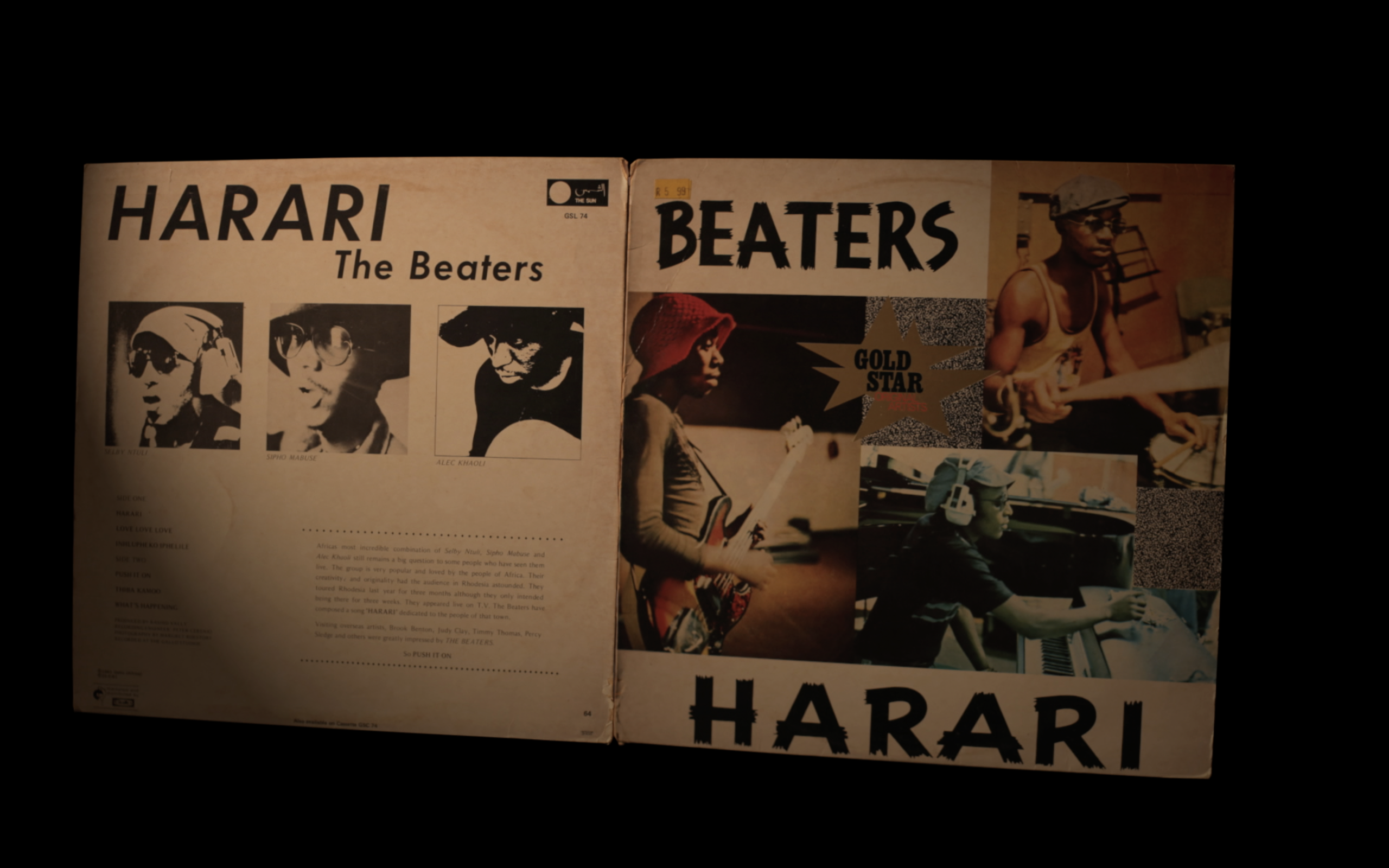
Fotograma de UPRIZE! (2017): The Beaters (más tarde conocidos como Harari) fueron una influyente banda sudafricana de afro-soul y funk formada en Soweto en la década de 1960.
A lo largo de ¡Arriba!, la vida cultural se erige como un espacio de constante transformación. A medida que el discurso político se veía cada vez más limitado, las ideas resurgían a través de otras formas y gestos. Las agrupaciones de jazz, los recitales de poesía, las representaciones escolares y el teatro comunitario se convirtieron en espacios donde se podía ensayar, poner a prueba y compartir la conciencia política. La música transmitía los ritmos de la liberación, mientras que la poesía oscilaba entre la reflexión privada y la declaración pública, transformando el lenguaje en una herramienta de movilización. Por otra parte, el teatro traspasó los límites del mero entretenimiento, convirtiéndose en un espacio a través del cual se podían escenificar y afrontar las difíciles realidades políticas. Figuras como Gibson Kente trabajaron en condiciones cada vez más restrictivas, creando representaciones que reflejaban las experiencias vividas bajo el apartheid, al tiempo que sorteaban los límites impuestos por la censura. A través de estas prácticas artísticas, la expresión y la resistencia se entrelazaron profundamente. En ausencia de libertad política, el escenario, la página y el quiosco de música se convirtieron en espacios a través de los cuales se podían (re)imaginar y compartir colectivamente nuevas posibilidades.
En la época del levantamiento de Soweto, la expresión cultural en Sudáfrica ya se había consolidado como un espacio en el que el pensamiento político y la vida cotidiana se entrecruzaban bajo presión. En el ámbito teatral, surgieron obras colaborativas en Johannesburgo y Ciudad del Cabo, entre las que se incluyen Sizwe Banzi ha fallecido (1972) y La isla (1973), creada gracias a la colaboración de Athol Fugard con John Kani y Winston Ntshona, representó las realidades de las leyes de pases, el trabajo y el encarcelamiento a través de una obra basada en experiencias vividas. En el ámbito de la poesía, Mongane Wally Serote y Oswald Mtshali dieron forma a la vida y la percepción de los townships, escribiendo de manera que plasmaran en sus obras los ritmos, las tensiones y las urgencias de la existencia urbana negra. Paralelamente, las producciones de Gibson Kente en los townships recorrieron colegios, iglesias y centros comunitarios, dando forma a una cultura escénica que existía al margen de las instituciones formales, pero que permanecía profundamente arraigada en la vida social cotidiana. A través de estas diferentes prácticas, la expresión circulaba por la palabra, el escenario y el texto, moldeada por unas condiciones en las que el propio lenguaje ya era un espacio de restricción y negociación.
En los años posteriores al levantamiento, la producción cultural comenzó a adoptar nuevas formas de visibilidad y difusión, marcadas tanto por una represión cada vez más intensa como por la apertura de espacios independientes de expresión. El lanzamiento de Staffrider La revista, fundada en 1978, se convirtió en uno de los hitos clave de este cambio, al crear una plataforma editorial en la que la poesía, la fotografía, la ficción y los escritos políticos podían escapar de las estructuras estatales y comerciales. Reunía obras arraigadas en la vida de los townships, la experiencia estudiantil y la observación urbana, lo que permitió que voces que hasta entonces habían circulado de manera informal entraran en la cultura impresa con un nuevo alcance y una nueva urgencia. Paralelamente a este campo literario en expansión, una generación de escritores —entre los que se encuentran Sipho Sepamla, Mafika Gwala, Don Mattera y Christopher van Wyk— da continuidad a un lenguaje moldeado por las secuelas de 1976, respondiendo a las condiciones de la vida cotidiana bajo el apartheid y al clima político que siguió al levantamiento. A través de las redes impresas y culturales, la expresión sigue oscilando entre la experiencia vivida y el discurso público, trasladando la ruptura y el impacto de 1976 a nuevas formas de articulación.
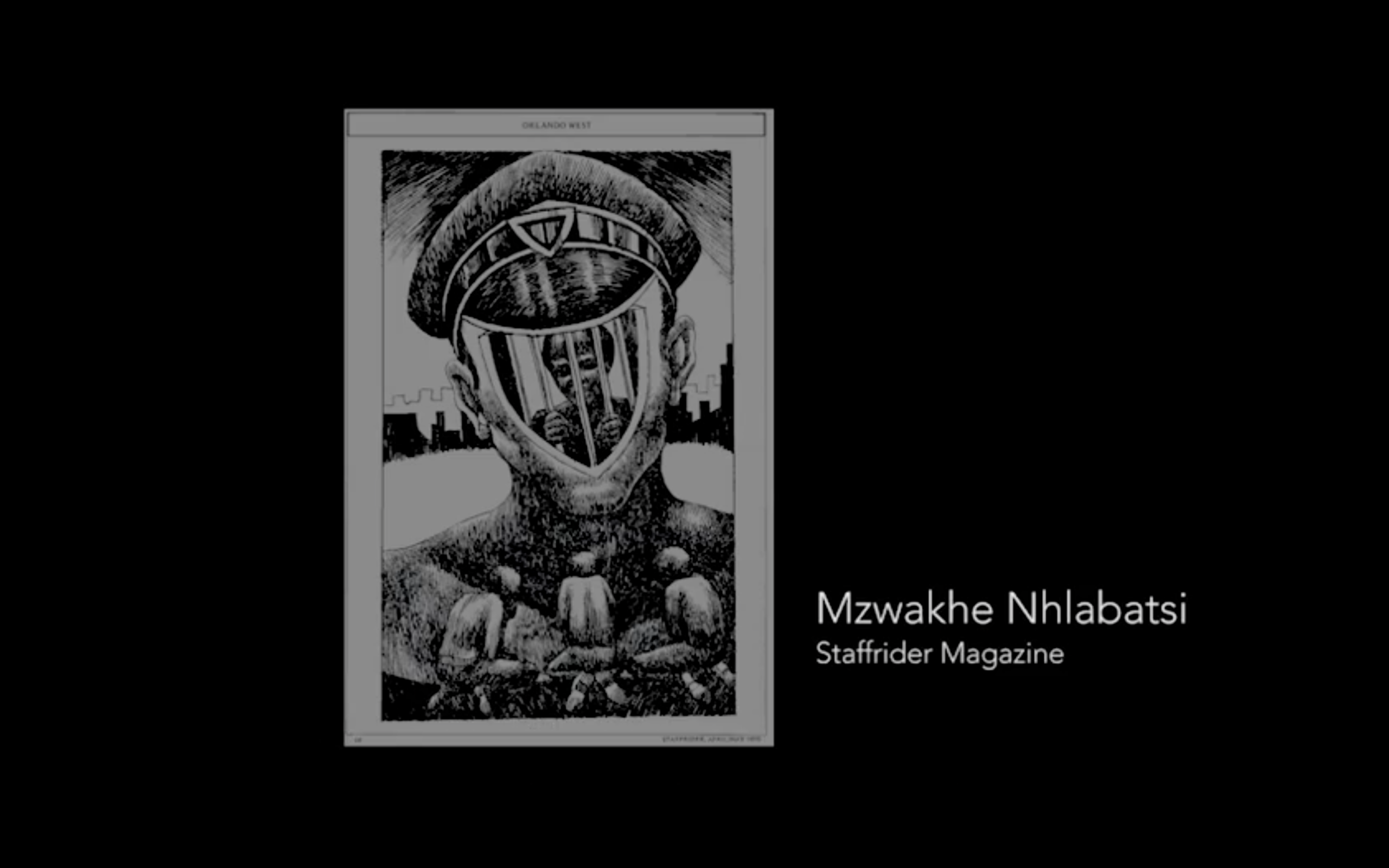
Fotograma de «UPRIZE!» (2017): Ilustración de Muziwakhe Nhlabatsi para la revista Staffrider
Las repercusiones culturales de 1976 se extendieron mucho más allá del propio levantamiento y siguieron marcando la producción artística sudafricana durante décadas. Entre las obras más reconocidas se encuentra ¡Sarafina!, el musical teatral de Mbongeni Ngema que se estrenó en 1987 antes de convertirse en una película aclamada internacionalmente en 1992. La obra, que narra la historia de un grupo de estudiantes que se enfrentan a la realidad de la educación bajo el apartheid, transformó las experiencias de la juventud de Soweto en un poderoso acto de memoria colectiva a través de la canción, la coreografía y la interpretación. Sin embargo, los cimientos de esta respuesta cultural ya se estaban sentando en los años previos al levantamiento. El dramaturgo Gibson Kente, a quien a menudo se conoce como el padre del teatro de los townships, desarrolló obras como Creo y ¿Cuánto tiempo?, utilizando el escenario para abordar las realidades sociales y políticas de la vida de la población negra sudafricana en una época en la que criticar directamente al Estado del apartheid entrañaba un riesgo considerable. Representadas en colegios, iglesias y centros comunitarios, estas producciones crearon espacios en los que el público podía encontrarse con reflejos de sus propias vidas y circunstancias. En conjunto, estas obras revelan cómo el legado de 1976 siguió circulando a través de la práctica artística, transmitiendo las aspiraciones, las frustraciones y la imaginación política de una generación mucho tiempo después de los propios acontecimientos.
“Cada año hay una demanda cada vez mayor de la película, lo que para mí significa que es ”Hacer lo correcto». Y esto ocurre con el público de todo el mundo. Sobre todo en un momento en el que muchos jóvenes sudafricanos atraviesan etapas de apatía política, hablan de estar «cansados del apartheid» y no muestran un interés real por las historias relacionadas con el apartheid, me parece realmente interesante que esta película siga teniendo éxito».”
Al reflexionar sobre la repercusión que sigue teniendo la película, Khanyile recuerda que le dijeron que ¡Arriba! es “el ¡Sarafina! ”de documentales», una comparación que se le ha quedado grabada a lo largo de los años. Casi tres décadas después, ¡Arriba! retoma muchas de esas mismas corrientes históricas, recurriendo a material de archivo y testimonios de primera mano para volver a examinar a las personas, las organizaciones y los movimientos culturales que dieron forma a ese periodo. La comparación pone de manifiesto cómo ambas obras siguen transmitiendo el legado de 1976, garantizando que las historias, las voces y las aspiraciones de aquella generación sigan formando parte de la conciencia pública contemporánea, activas, sin resolver y aún en movimiento.
sobre el autor
Ndidi vive entre Berlín y Viena y desarrolla su actividad en los ámbitos de la fotografía analógica, la imagen en movimiento y la práctica curatorial y editorial. Su obra se centra en estructuras narrativas experimentales y en la narración visual, y a menudo se nutre de material de archivo y de investigación.
Además de su labor creativa, cuenta con experiencia en el ámbito de la comisaría y la programación en el sector artístico, lo que incluye la moderación y el apoyo a eventos cinematográficos y culturales.
Ndidi tiene un máster en Bellas Artes por la Academia de Bellas Artes de Viena y estudió filosofía en la Universidad de Viena. Actualmente desarrolla proyectos independientes y está ampliando su trayectoria hacia el cine.