Die indigene Science-Fiction-Liebesgeschichte über die Klimakrise und die Kraft der Sprache: „Itu Ninu“
by Will Furtado
23. Juli 2026
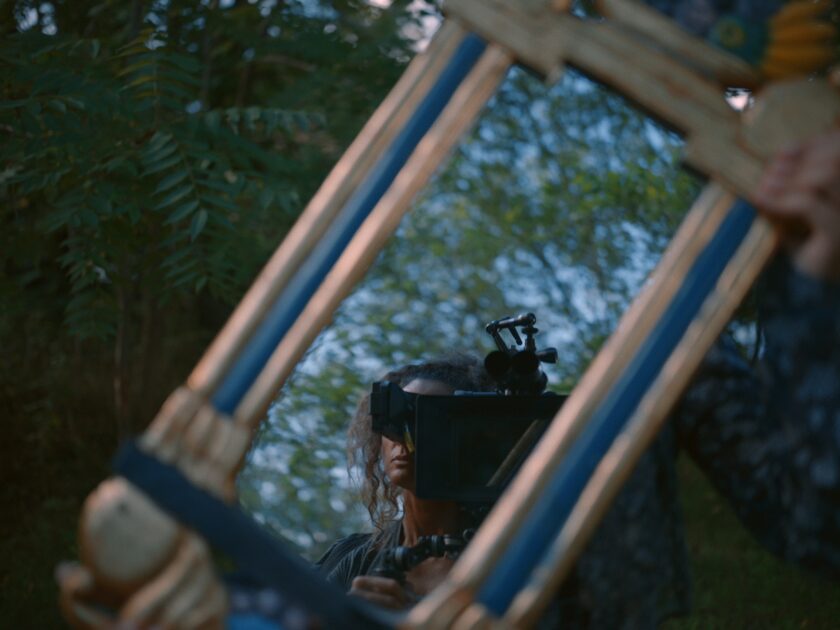
Itandehui Jansen’s movie Itu Ninu follows two Indigenous climate refugees who live under surveillance and communicate only through handwritten letters in Mixtec. Set in 2084, the sci-fi film reinterprets many of today’s tech and eco anxieties while reaffirming the crucial importance of offline relationships and the preservation of our cultures and land.
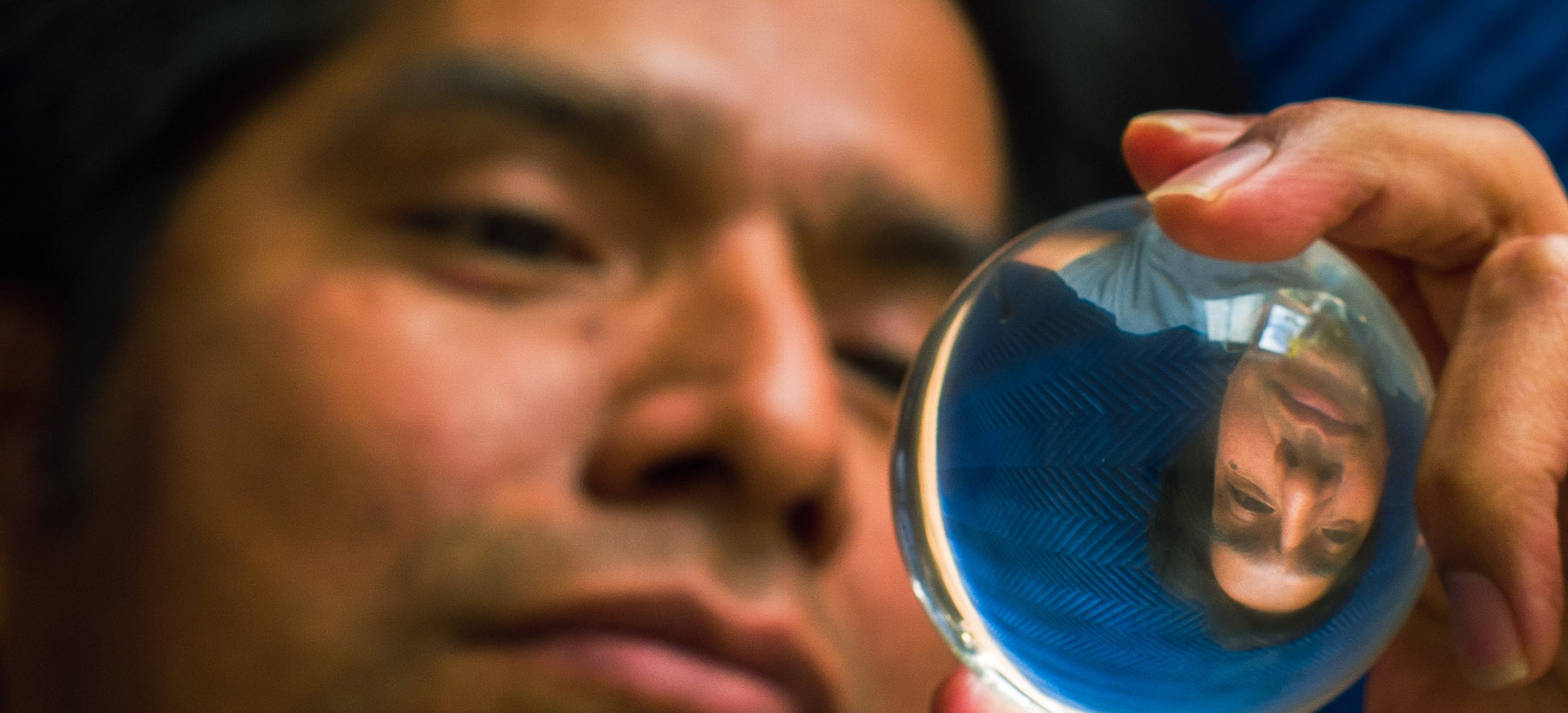
Still from the film Itu Ninu, 2023, directed by Itandehui Jansen. Courtesy of the film’s production
Many diasporic people know that speaking our native languages is a very important element in maintaining a sense of self and belonging. Yet, in many cases, we have to find other ways of doing that when, for instance, we are unable to speak them collectively. “Learning a language without a community is really hard,” Itandehui Jansen tells me in our conversation over Zoom about speaking our Indigenous languages as diasporic peoples. Itandehui Jansen is a film director whose mother is from Mexico, and who upon moving to the Netherlands started to feel very isolated due to the lack of people to practice her native Mixtec with, a language Indigenous to southern Mexico.
This story was partly the inspiration behind Itandehui Jansen’s 2023 movie Itu Ninu. Meaning “a corn field high up (in the mountains)” in Mixtec, the film follows the relationship between two climate refugees in a non-descript Western country who live under intense surveillance and can only communicate via hand-written letters. This is the first sci-fi Itandehui Jansen has directed and it was written by her husband and longtime collaborator, Armando Bautista Garcia, who also stars in the film.
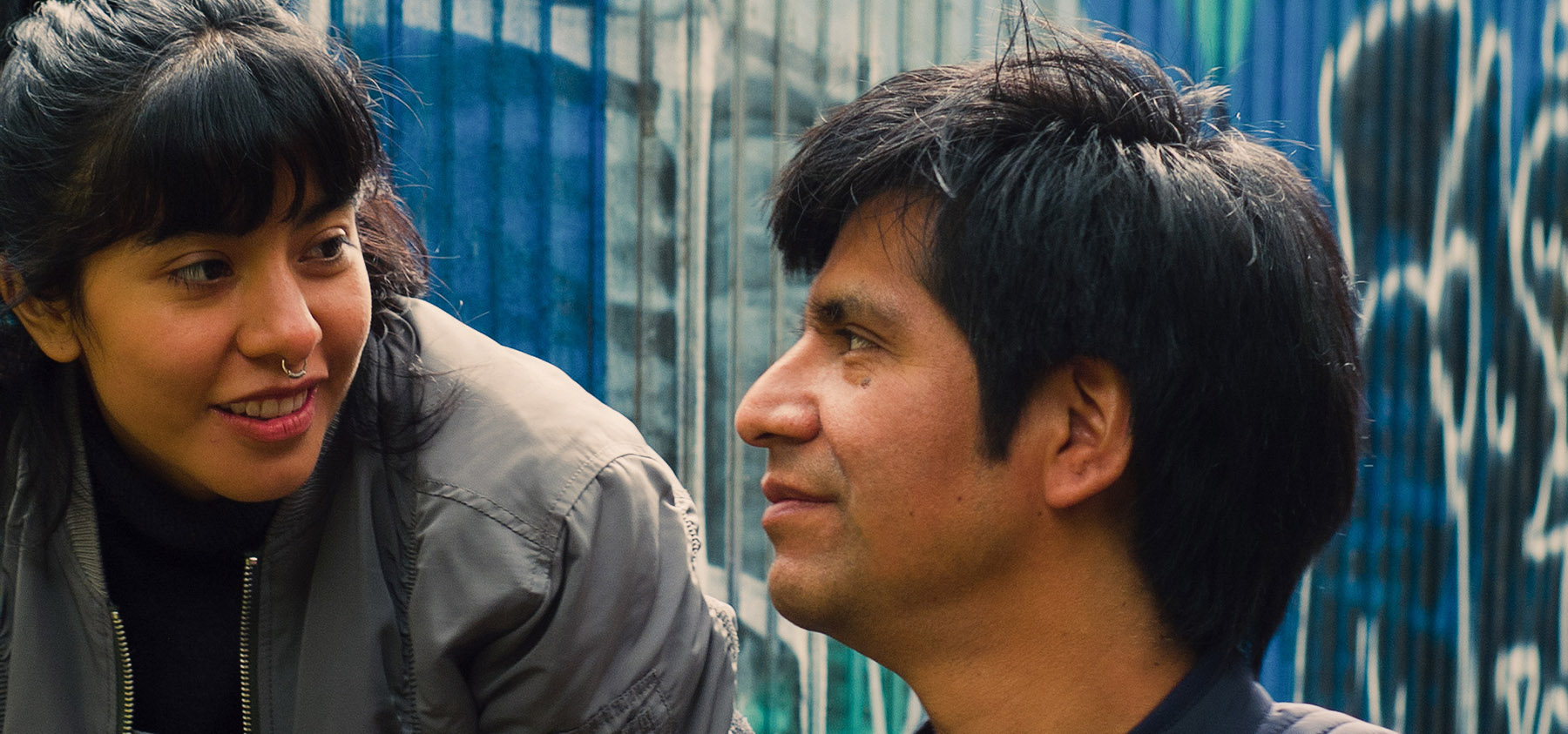
Still from the film Itu Ninu, 2023, directed by Itandehui Jansen. Courtesy of the film’s production
While set in 2084, the themes and stories in Itu Ninu feel, sadly, all too close to home in 2026: ecological knowledge is extracted from Indigenous peoples, climate refugees are forced to live with omnipresent digital monitoring, and people live in isolation, but with little privacy. “Originally it started as a story about a migrant feeling isolated in a smart home that sort of worked against them,” Jansen tells me, speaking from Scotland, where she lives and teaches film at Edinburgh Napier University. “And here in Britain, there is this horrible law that wants all asylum seekers to be digitally tracked. And I thought, well, that’s quite dystopic. So all those elements started to come into the film and then we thought we’d try to make it as a sci-fi.”
The film opens with a scene with Ángel, played by Armando Bautista, taking a shower with a blank look while listening to reminders on a smart watch of sorts—the “smart visa wristband”. Ángel is routinely reminded that he cannot consume more water than the daily allowance, that he must wear the wristband at all times, that it records sound and video of his surroundings, and that he cannot speak or exchange organic material with non-authorized people, all under the threat of losing his visa and getting deported.

Still from the film Itu Ninu, 2023, directed by Itandehui Jansen. Courtesy of the film’s production
Ángel’s daily life is monotonous and lonely. He mostly moves between his home and his job where he catalogues Indigenous seeds at risk of extinction for his Western employer. The drudgery of his routine is only broken by his secretive meetings with Sofia, played by Alejandra Herrera, another climate refugee from Mexico who otherwise toils away in a recycling facility. Since all their movements are being recorded, they cannot speak during their secretive meetings and therefore can only communicate via hand-written notes, in Mixtec.
Despite not being fluent in Mixtec, Jansen has made other films in the language including her very first: El Rebozo de mi Madre (My Mother’s Shawl) which she worked on with her own mother, Aurora Pérez Jiménez. “She was the interviewer and did most of the sound recording. And she recorded most of those interviews in Mixtec if the person’s first language was Mixtec,” she recalls. “I did edit those interviews based on my knowledge of certain words and the cadence of the language because I’ve been around it enough to understand when somebody has finished a sentence.” Itandehui Jansen is living proof that we don’t need to speak our native languages to perfection in order to engage with our Indigenous cultures and keep them alive.

Still from the film Itu Ninu, 2023, directed by Itandehui Jansen. Courtesy of the film’s production
Working organically and with family comes naturally to Jansen, and that relationship has proven reciprocal and symbiotic. For example, climate change had always been a concern for Jansen both thematically and as environmental practice, yet her 18-year-old son has pushed her to take an even more serious stance on the carbon footprint of film production. “I need to really credit my son. He wants to be an environmental scientist and from very early on, he wanted to be a vegetarian and cared about biodiversity.”
“Capitalism extracts from both communities and nature and workers. So in the film we have a corporation that is wanting to make profit off the seeds but also off the knowledge of Ángel. It’s the force we never see in the film but it’s very much something we seriously thought about.”
This meant that Itu Ninu had a very low production budget, it was made with low tech methods, materials were sourced from charity shops, they walked to locations and everyone was paid a fair wage. “In our research, we looked at how different plants are threatened, particularly in the wild,” Jansen explains. “Capitalism extracts from both communities and nature and workers. So in the film we have a corporation that is wanting to make profit off the seeds but also off the knowledge of Ángel. It’s the force we never see in the film but it’s very much something we seriously thought about.”

Still from the film Itu Ninu, 2023, directed by Itandehui Jansen. Courtesy of the film’s production
Jansen’s critique of contemporary capitalism also manifests in other formal aspects of the movie—namely its pace. I tell her that as a viewer I saw myself seduced in to slowing down and practice patience. From start to finish, the movie has a contemplative quality to it. Each scene unfolds slowly and the several close-ups of faces, plants, nature and other details function as gentle transitions. “I feel that there is this pressure of us having to do everything faster and faster all the time, because we need to be productive,” she continues. “There’s no time for rest, there’s no time for recharging, there’s no time for anything, really. We’re almost becoming addicted to that fast pace. And I just wanted to be radical about it and do something really slow paced.”
There was yet another very important reason for the slow pace, however—language! As the dialogues are entirely in Mixtec voiceovers, there was a need for subtitling. “Reading subtitles has a certain pace to it. If it goes too fast, you sort of miss the image or you miss the sounds,” she explains. “So I was also trying to allow for space to enjoy the film and still be able to read the subtitles and hear the voice.” The director also explained that because there are different variations of Mixtec, given the enormity of the region where it is spoken and its mountainous terrain, even her own grandmother would need subtitling.
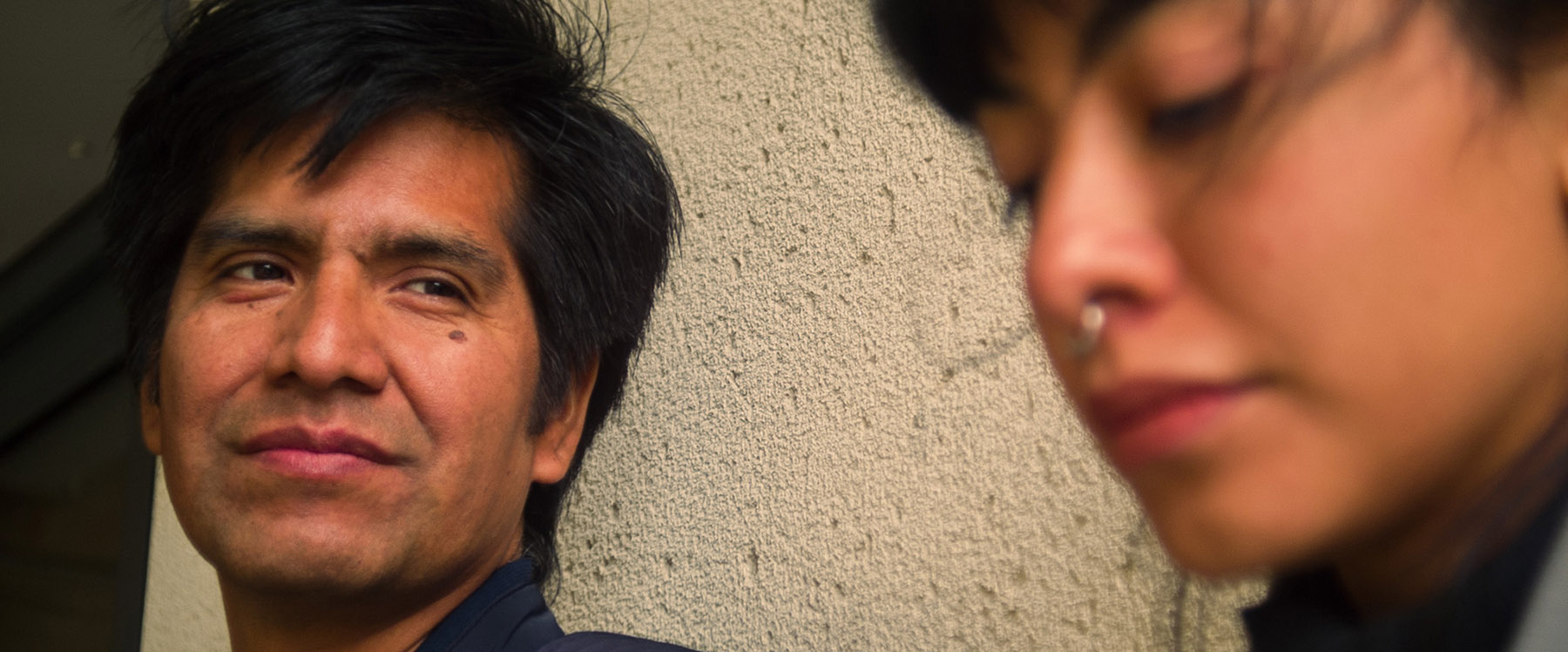
Still from the film Itu Ninu, 2023, directed by Itandehui Jansen. Courtesy of the film’s production
Her husband Armando Bautista Garcia also speaks Mixtec. “The tricky thing,” she warns, “is that his Mixtec is different from my mother’s. They can have wonderful conversations about where it overlaps and where it’s different, but usually they speak with each other in Spanish. I’m going to give a very simple example: My mother’s Mixtec says they’re ‘the people of the rain’ and that’s ‘sahìn sàu’. And my husband’s Mixtec says exactly the same thing, but they use the term ‘da davi’.”
Despite Indigenous languages being cultural markers and practices of resistance, they also remain a tool of communication. And as a tool, its usage boils down to how and where it’s applied. Yet the results of that vary according to context and that’s also part of the magic and power of Itu Ninu. When it was shown in a Mixtec-speaking farming community in California, U.S.A., the viewers resonated very strongly with Ángel’s character for how it preserves Indigenous seeds in the film. “They have had farms or have come from farms in Mexico and were working with genetically modified seeds in the U.S. farm,” Jansen recalls. “And they were worried that that was one of the reasons why the corn seeds they had brought from home were struggling to grow in their own gardens in California.”

Still from the film Itu Ninu, 2023, directed by Itandehui Jansen. Courtesy of the film’s production
This ecological and existential anxiety is also foreseeably mirrored in Itu Ninu. Throughout the film, Ángel and Sofia grow their friendship and romance in their silent escapades, at times in the city, at times in nature, and through their letters in Mixtec, which they read in the solitude of their respective homes. But the specter of surveillance and potential deportation as punishment haunts their every move.
Tension in Itu Ninu is visualized in a dystopic narrative that no longer feels strange to today’s viewers. Anyone with a smart phone know may the feeling of having our conversations monitored when we’re confronted with an ad for the exact product we spoke about moments before. Or when we refrain from posting content critical of fascist governments for fear of retaliation. Simultaneously, Itu Ninu also poetically points to some of the few things that have always countered the regime of modernity: to secretively dodge the system by creating community offline, by honoring our Indigenous languages and by protecting the land with all the risks that that entails, because we must; because it’s our only choice, if we want to keep our planet alive.
This review was originally published on C& América Latina (C&AL).
über den Autor
Will Furtado is a Portuguese-German artist, writer, and scholar of Guatemalan and Cabo Verdean descent based in Berlin. Their practice combines western and non-western knowledge systems to recover forgotten archives and connect global histories of poetic dissidence. Since 2027, they have been an integral part of the art platform Contemporary And, currently serving as the Editor-in-Chief of its Latin American edition (C&AL).
Contemporary And América Latina (C&AL) is a contemporary art magazine that connects Latin America, the Caribbean, Africa, and Asia, publishing in English, Spanish, Portuguese, French, and Creole. It is one of the publishing projects of Contemporary And (C&) – a platform for international contemporary art, reflection, connection, and exchange. Founded in 2013, C& also organizes free education programs, reading rooms, mentoring initiatives, artist commissions, and the C& Cyclopedia.