Madame Brouette
by Moussa Sene Absa
Senegal, 2002


synopsis
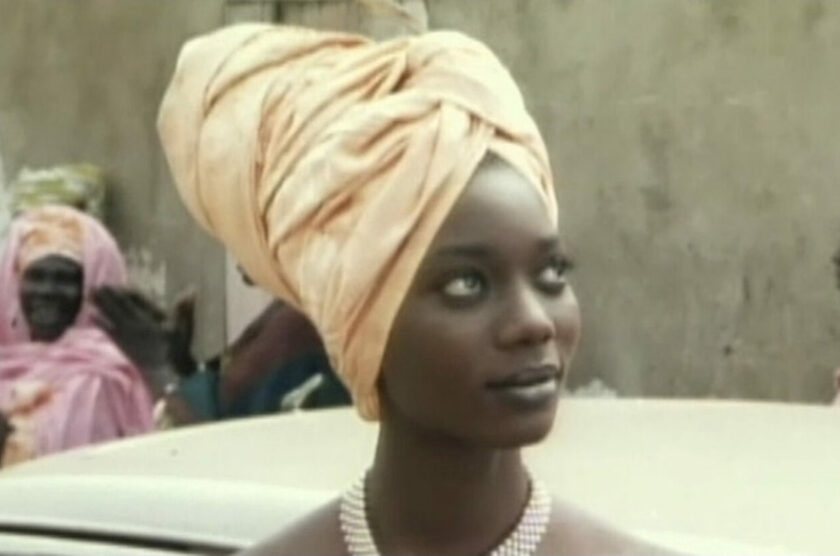
Proud and independent, Mati, also known as Madame Brouette (“Mrs. Wheelbarrow”), makes a living by pushing her wheelbarrow through the marketplace in Sandaga, Senegal. Divorced, she dreams of one day opening her own diner so she can earn a living with dignity, together with her daughter, Ndèye, and her friend, Ndaxté, who has also escaped from a violent marriage. Mati has had enough of men, and doesn’t want anything more to do with them. Fate, however, comes calling, in the person of charming and smooth-talking Naago, a cop. Despite her misgivings, Mati falls in love once again. This time, it may be the real thing… One day, at dawn, the residents of the Niayes Thiokeert district are awakened by the sound of gunfire. In full view of the horrified neighbours, a wounded Naago emerges from Mati’s house and collapses. What pushed Madame Brouette to this extreme?… Was is it really she who pulled the trigger?
– African Film Festival NY
about the director
Moussa Sène Absa (b. 1958, Senegal) is a celebrated filmmaker, screenwriter, painter, and author. He began his cinematic career as a screenwriter for Les Enfants de Dieu, and his directorial debut Le Prix du Mensonge (1988) earned him the Silver Tanit at the Carthage Film Festival. After starting out as an actor, Absa went on to direct a number of acclaimed short films, documentaries, and features.
His first feature Ken Bugul (1991) was followed by Ça Twiste à Popenguine (1992), which brought him international recognition. In 1996, he directed Tableau Ferraille, awarded Best Cinematography at FESPACO in 1997. This film marked the beginning of his trilogy on women, continued with Madame Brouette (2002), which received the Silver Bear at the Berlinale, and completed with Xalé (2022).
Despite being widely known internationally, Absa remains less celebrated in Senegal, although his television work, particularly the popular series Goorgoorlu (written by TT Fons and produced by RTS), reached a broad domestic audience. His later films Teranga Blues (2007) and Yoole (2013) were both selected for competition at FESPACO.
Often described as embodying the ideal of the “homo senegalensis” – an artist rooted in tradition yet open to global influence – Absa’s multifaceted work reflects a deep engagement with Senegalese society and culture.