La magnética búsqueda del sentimiento: Conversación con la directora de fotografía Frida Marzouk
by Nataleah Hunter-Young
28 de abril de 2026
The work of cinematographer Frida Marzouk is shaping a generation of North African and Arab arthouse filmmaking. Among her striking feature length collaborations are Firas Khoury’s Alam (DoP, 2022), Erige Sehiri’s Bajo las higueras (DoP, 2021) and Cielo prometido (DoP, 2025), Scandar Copti’s Felices Fiestas (second DoP, 2024), and Lina Soualem’s Adiós a Tiberíades (DoP, 2023). Always dexterous and delicate with her framing of human experience, Marzouk’s visual touch summons the urge to hold one’s breath for fear of disturbing the air between characters.
Aside from an early experience as first assistant camera operator on Abdellatif Kechiche’s Games of Love and Chance (2003), Marzouk’s industry career began in New York as a best boy and gaffer, foreshadowing her talent for conjuring just enough light to make the actors “glow,” as she puts it. Eventually becoming a set electrician, she would go on to light Brian Koppelman and David Levien’s Solitary Man (2009), Darren Aronofsky’s Black Swan (2010), all three chapters of Chad Stahelski’s John Wick trilogy (2014, 2017, 2019), while also reuniting with Kechiche for the internationally acclaimed Blue is the Warmest Colour (2013). Between commercial gigs, Marzouk initiated a prolific transition to cinematography that now includes Ahd Hassan Kamel’s My Driver & I (2024), Amel Guellaty’s Where the Wind Comes From (2025), Suzannah Mirghani’s Cotton Queen (2025), and Eimi Imanishi’s Nomad Shadow (2025). It is worth noting that each of Marzouk’s 2025 film credits is helmed by a woman.
A natural creative technician – training as a musician before going on to study cinema at university – Marzouk brings to her craft a deep respect for instinct and improvisation. Still, she tells me over Zoom, “I think it’s very important for a film to be beautiful.” Reflecting on how she developed her visual language, the narrative themes she is drawn to, and her most impactful collaborations, Marzouk and I discuss how she refined her creative practice through attention to details that are felt, not only seen.
FM I think it’s people who let you know that you have a unique vision. You know what I mean? If you tell me I have a unique vision, I’m like, do I?
Of course, I have my personality and way of seeing things, but you always feel like: Oh, come on – how can it be just my own? We are all fed a lot of the same things… But you don’t realise that it’s true. You do have your own vision. It’s only now, after all this time – and also working with many different people – that you realize that people are looking for something in you. That’s when you realize, maybe there is something unique to what I’m doing visually.
NHY I know that it can often be curiosity that draws you in. Wanting to explore what the camera can do, to learn more about what’s possible.
FM Yeah, but you do develop a taste for some things, and movements. It is much more of a physical than intellectual thing. It’s something that happens with the body after time.
NHY Can you talk more about that? It sounds like you are saying the camera becomes an extension of your body.
FM In my first two feature films as a DP, I was not the camera operator. It was only Bajo las higueras when I started to film myself. I had a lot of time to watch other people do the work.
From the outside it seems hard because you have to follow people. How do you avoid cutting someone off? How do you not miss a movement?
I was lucky to be working with Erige [Sehiri] because we have the same kind of sensibility to things. It was on that film that I was able to do whatever I wanted with the camera.
Maybe by watching other people and movies, you register what you’re supposed to do. It’s an instinctive thing that happens. The first time I was doing it, I remember thinking the result was better than I thought [it would be]. I was finding my footing, how to move… Because I was in a fig field, it was gentle. On concrete, you can feel more of the movement from walking. When you are on earth, it makes everything smoother. I remember thinking, “wow – this is helping the operating.”
I learned how to do handheld camera on Bajo las higueras. Having two months of just framing – being with people, being comfortable – helps you to really find your language.
NHY The environments you choose to work in range, but a lot of your work takes advantage of outdoor, open-air environments. How are you drawn to capture the outdoors, particularly Tunisian and North African landscapes?
FM I think those projects find me more than I find them… Since Bajo las higueras film, a lot of women filmmakers have reached out to me from the region because they liked the film and thought, “there’s a woman DP, maybe I’d like to work with her… an Arab woman filmmaker, maybe I would feel more comfortable.”
In terms of North Africa and the scenery, nature is a very good school. You have no control and you have to find a way to make things work. If you start a scene in the morning, you have to make it match if you finish in the afternoon. You have to learn the tricks of working with real life events. Later on, when you work on movies that are more controlled, you’ve developed a super quick habit of knowing when to do this, when to do that. It becomes second nature. It sounds easy to say, “I’m shooting outside daylight.” You [think you] have nothing to do, but actually sun can be really harsh and ugly at certain times. You have to find ways to tame it.
NHY I’ve noticed many themes in the projects you collaborate on, but there is something special you do with projects featuring central women characters… I wrote it down as, “women at the apex of their own worlds.”
There is that image of Hiam Abbass in Adiós a Tiberíades standing over the village of Deir Hanna, pointing out the directions of the surrounding countries. Or in Cynthia Sawma’s Scenes from Home… There’s a way that you shoot women from below, across an open sky or landscape.
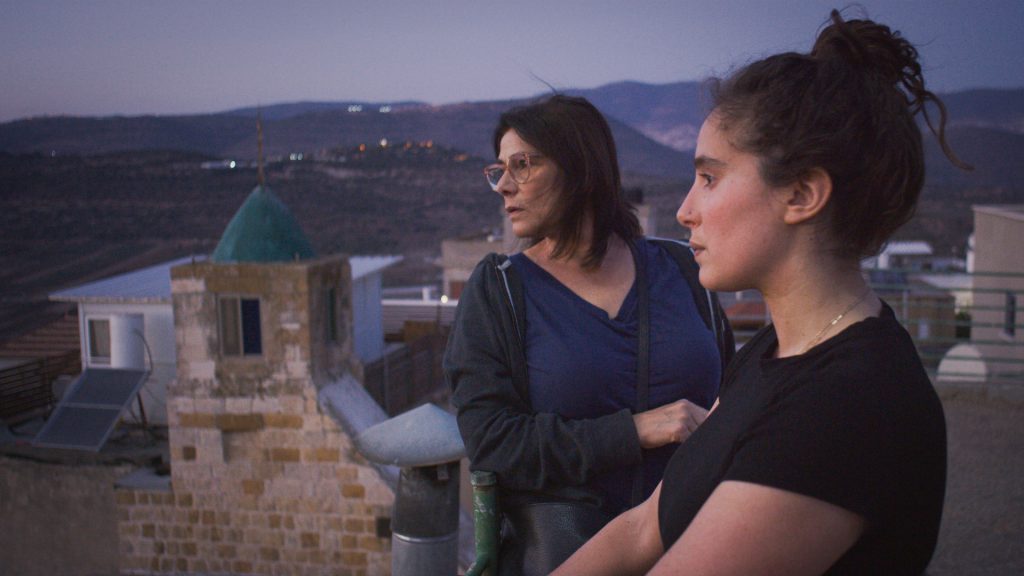
Adiós a Tiberíades by Lina Soualem (2023)
FM It’s funny because those are the things that you can see. What you just said about the sky, it’s in [Erige Sehiri’s] Promised Sky. There’s a moment where Aïssa [Maïga, who plays Marie] is against the sky, and it’s also an improvised moment. I guess I do that.
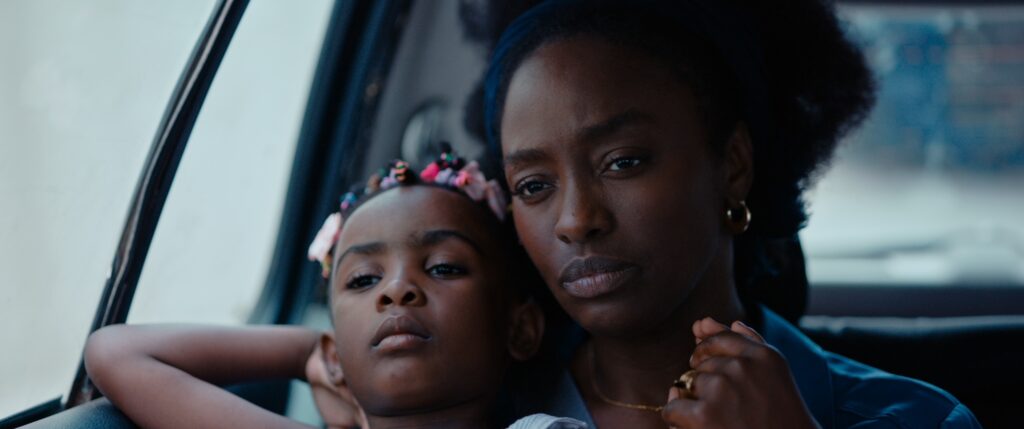
Cielo prometido by Erige Sehiri (2025)
When I watch someone, I get inspired. Also, the beauty of the person – I am not talking about physical, even though Aïssa is so beautiful, you could look at her for hours – but in general. You can always find a way to see someone. Somehow, through the camera, people kind of glow.
When you put your eye to it, it is really magical. Everything is normal. You have a scene, then you put your eye to the camera, and you start seeing things. It’s almost… not hypnotism, but you’re in your own world. You can just be inspired. Then, I try to go with my feeling. It’s not something that I prepare or think about [in advance]. You’re just going with the flow. You’re following, and it’s an improvisation.
But am I filming women in a certain way? I’m starting to think about that because I was asked that question recently and wondered, do I film men the same way? And I don’t think I do. It’s true – I think women have certain features, or maybe it’s the way they move. Maybe I prefer it, subconsciously, but when I watch women, I find more beauty, I guess.
NHY It is clear that you find something in it. Perhaps that’s why you have filmmakers reaching out to you after they see your work, excited to learn it was done by a woman cinematographer who is also from the region.
In the projects you collaborate on, it’s remarkable that both you and the director are exploring some space between fiction and documentary. Somehow, together you find these monumental moments, like in Bajo las higueras when the elder woman starts to sing during lunch, or the high-stakes kindergarten and closing scenes in Happy Holidays. Could you talk about how you work in a way that stays open to what arises naturally?
FM I will take one example of a scene from Felices Fiestas where the family is gathered in the living room and they’re preparing for the wedding. There were two cameras – the two DPs – and, in the beginning, we were each assigned a side of the room.
We would find ways to follow someone, then someone else. We didn’t know who was going to move where, even the actors didn’t really know. Sometimes you would get the other camera in the frame, but it didn’t matter because we knew Scandar [Copti] would cut it out. It was very much about following the action, not knowing what was going to happen – which was very exciting.
We had very long takes. We would do the whole card, like a documentary. It was something I had never experienced before, but Scandar never gave the script to the actors. They lived the movie like life, not knowing what was going to happen tomorrow. I think it was such genius.
NHY I can imagine that collaboration was very exciting but also required some endurance.
FM Yes, very much. Mental and physical endurance.
NHY Can you say more about shooting fiction and documentary, and whether you approach them differently?
FM The distinction we make between documentary and fiction sometimes feels almost nonexistent to me. In my own work, I approach both in a similar way, leaving space for improvisation and unpredictability. Obviously not every fiction is shot like a documentary, but I like to shoot a documentary like a fiction in terms of look – if that makes any sense.
I also notice that production companies often treat documentaries differently, as if they can be shot with whatever camera is available. But I strongly feel that the same level of care should go into the choice of lenses and camera, in order to create a true cinematic experience. I like any film that I do to look like a movie. I am extra careful in choosing the documentaries that I make in the sense that I want to make sure there will be space for discussion on that matter. It doesn’t necessarily mean expensive equipment, but thoughtful choices. Treat a documentary the same way as a fiction film. Whether it is going to TV or to a movie screen. I believe the image can bring value to the story and touch people.
NHY How would you say that your style and approach have grown in your time as a DP?
FM I rewatched Bajo las higueras recently because I did a masterclass a week ago at a festival, and I thought, wow, it’s so close. Why am I so close?
NHY Yes [laughs].
FM Why are you always cutting the forehead?
NHY I loved that though [laughs].
FM [Since] it was my first time operating [while also being DP], I guess I wanted to get close because it’s so intimate and so powerful. But when I watched it again before doing Cielo prometido, I thought, you know what? This time maybe you need to let it breathe a little bit. Even though I know a lot of people liked it, and I did too at the moment, now I want to get close, but not necessarily all the time. Not [always] moving. You learn to [adjust], should I go closer at this moment or further.
The movie I just did in France, I was trying to keep a good frame but there’s one scene where I felt like I really need to get close-up. With experience, you learn when to really push and when to stay in your place.
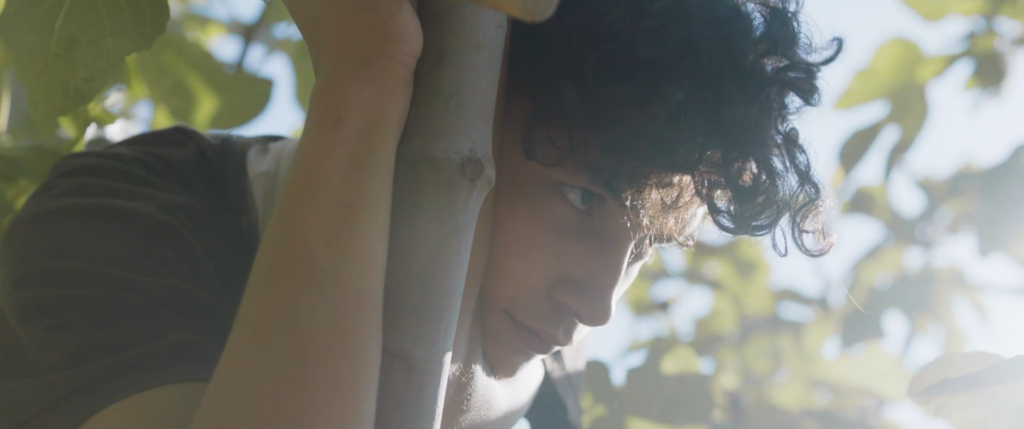
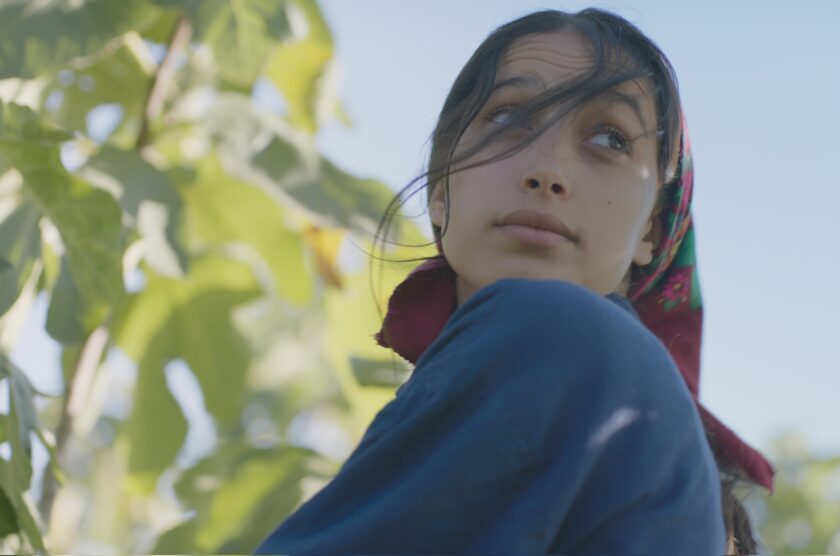
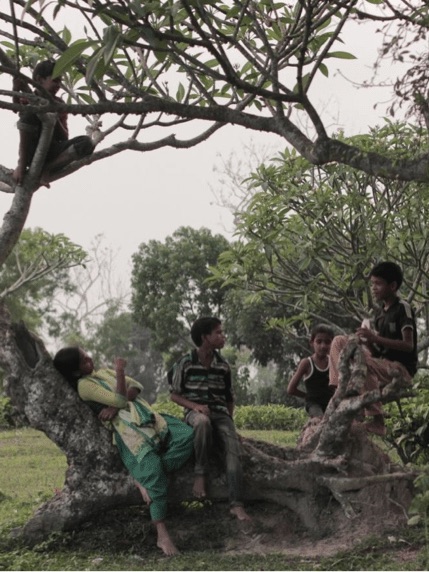
Bajo las higueras by Erige Sehiri (Tunisia, 2021)
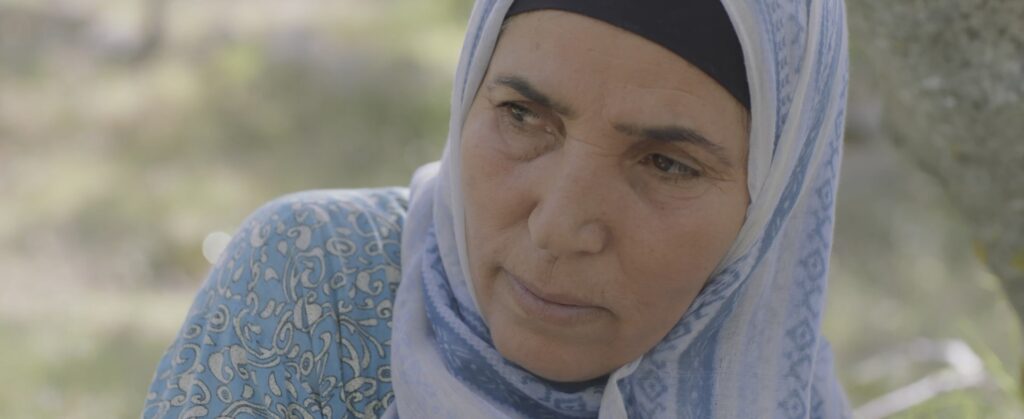
Bajo las higueras by Erige Sehiri (Tunisia, 2021)
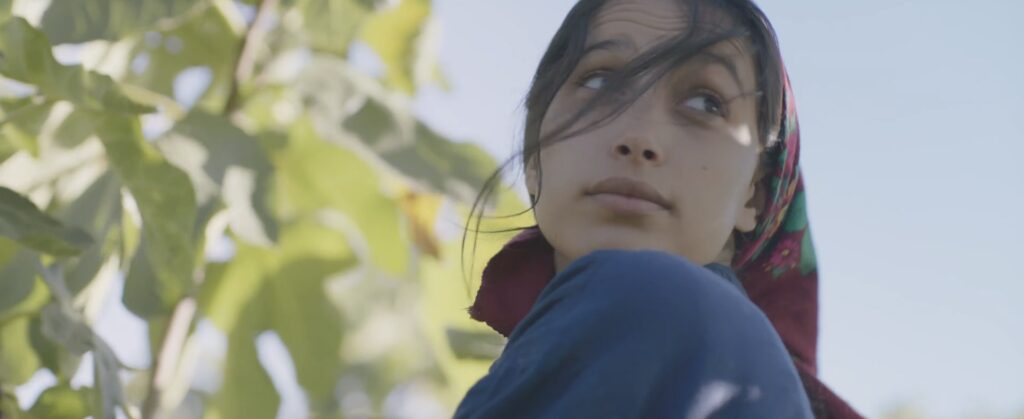
Bajo las higueras by Erige Sehiri (Tunisia, 2021)
NHY Are there special moments across any shoot you’ve done that stick out to you?
FM I think my favourite shoot so far is Cielo prometido. Not only for the shoot, but because I can watch it with pleasure and enjoy it.
There was a moment when Aïssa [Maïga who plays Marie] is in the kitchen with Touré [Blamassi who plays Noa] and he tells her, do you want to keep this child? He kind of puts her in front of her own trauma. When you shoot these scenes, it’s not something you’re going to redo. I remember thinking, okay, there are two people in this room, I need to know when she’s going to start feeling a certain way, when should I pan, who should I stay on… I thought to myself, do not move if you don’t have to move.
Sometimes you pan for nothing and miss the most important moment. I stuck on Aïssa, and we hear a lot of Touré speaking out of frame, then at some point you can tell it’s coming. She’s getting super emotional and I knew there was no need to go to Touré at that moment. There was absolutely zero interest.
I stayed a long time on her and you kind of have the reflex to want to move but sometimes the best thing to do is to stay. For me, it was a [significant] learning moment. You don’t have to do anything for things to be powerful.
NHY You really don’t shy away from political projects. I find bravery and boldness in them. Why are you drawn to those projects?
FM I realize that the movies I’ve done are usually about a cause, an issue, racism, or a conflict but somehow, it’s not on purpose. Of course, if I can help, I want to help, but it’s more [that I am drawn to that project] because the person that’s telling it has it as a personal story. I think it’s really about the personal story in the middle of the political issue. It’s more about how people lived through these traumas.
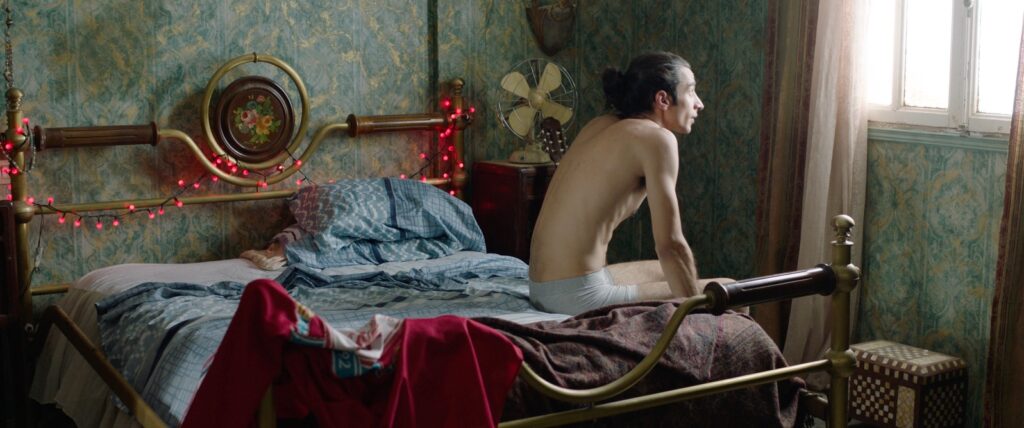
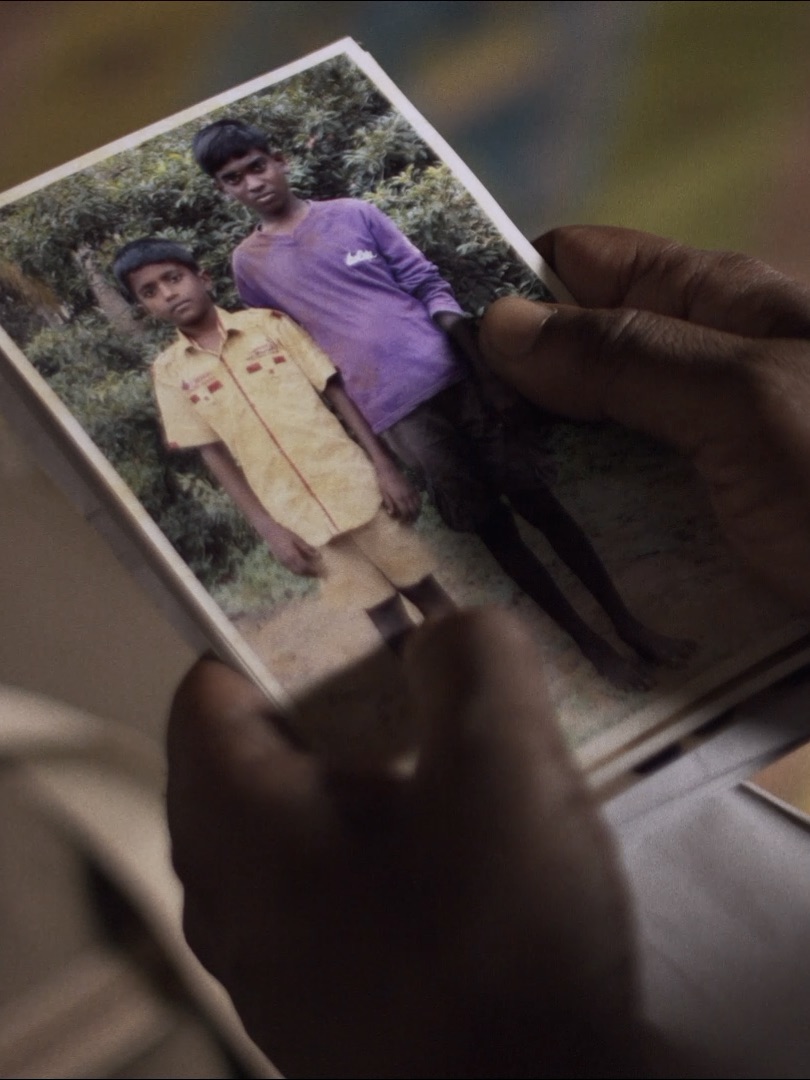
Alam by Firas Khoury (2022)
NHY Making what is such a big issue, very clear and human.
FM I love showing a personal story in a universal issue.
NHY Last question, is there a special collaboration that stands out to you? If so, what made it special?
FM I think my collaboration with Erige has been the most fulfilling and the one where I’ve learned the most. It made me a better DP. Then you meet people like Scandar. He’s the other person who has stuck with me. I have a lot of admiration for him, for many reasons, but I think Scandar and Erige have this thing in common: they have a lot of humor. People who are able to have humor in situations that are completely dramatic, I have a lot of admiration for. The two of them are full of life.
sobre el autor
Nataleah Hunter-Young is a writer, scholar, and independent film curator. At the University of Toronto, she is Assistant Professor of Black Creative Practice and Arts Management in the Department of Arts, Culture and Media (UTSC) with a graduate cross-appointment to the Cinema Studies Institute (UTSG). Between 2021 and 2024, Nataleah was International Programmer responsible for feature selections from Africa and Arab West Asia at the Toronto International Film Festival (TIFF). Having supported festival programming at TIFF since 2017, she has also programmed with Hot Docs Canadian International Documentary Festival, Durban International Film Festival, Reelworld Film Festival, and Toronto Outdoor Picture Show. Nataleah was born and raised in Toronto.